Try the pair, not one shoe
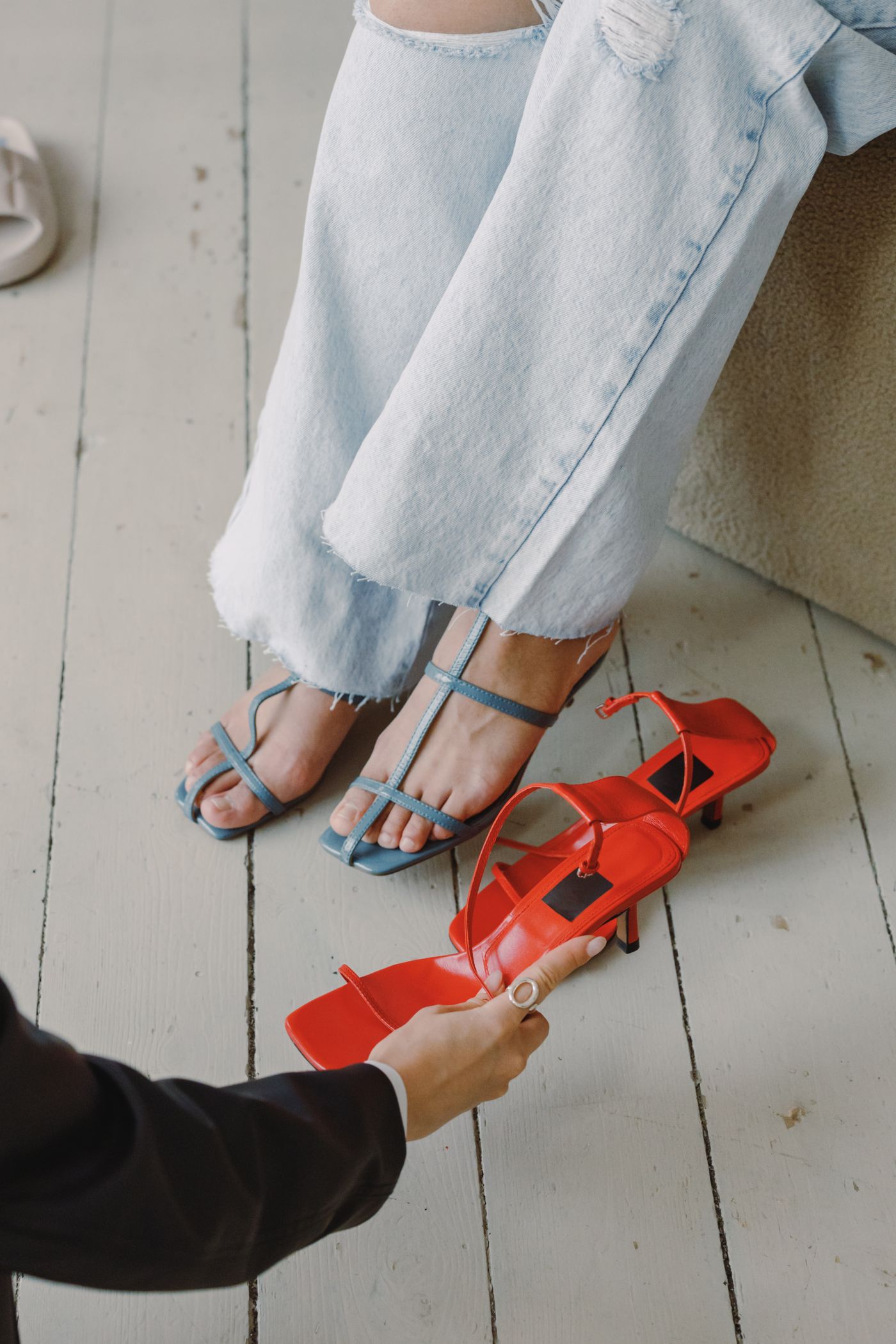
Put on both shoes and fasten them as intended. Use the socks or tights you expect to wear rather than whatever happens to be convenient. Check the fit around the heel, across the foot and at the toes without forcing your foot into a shape that feels wrong.
A familiar size is only a starting point. Clarks notes that styles can fit differently, so compare the actual pair rather than trusting the number alone. If you use an insert, assess it as part of the combination rather than assuming it will fit comfortably later.
Walk as you normally would
Take several steps on the permitted surface and change direction. Notice rubbing, slipping or pressure, and check whether you are shortening your stride to keep the shoe comfortable. Standing still can conceal a problem that becomes obvious in motion.
Think about the purpose. Shoes for a brief seated occasion have a different workload from shoes for a day of walking and public transport. That does not mean discomfort is desirable in either case; it means the try-on should reflect the use you are buying for.
Do not buy a promise of comfort
Some materials change with wear, but do not depend on painful shoes becoming right through determination. Try another width, size or style when the fit is consistently uncomfortable. Avoid choosing solely because the design is difficult to find elsewhere.
At home, follow the retailer's instructions for trying shoes while preserving their condition. Check them with the actual clothes you plan to wear before committing. If you have ongoing pain or a specific foot concern, obtain suitable professional advice instead of treating a general shopping guide as a diagnosis or assuming one style will solve it.