Choose a workable surface
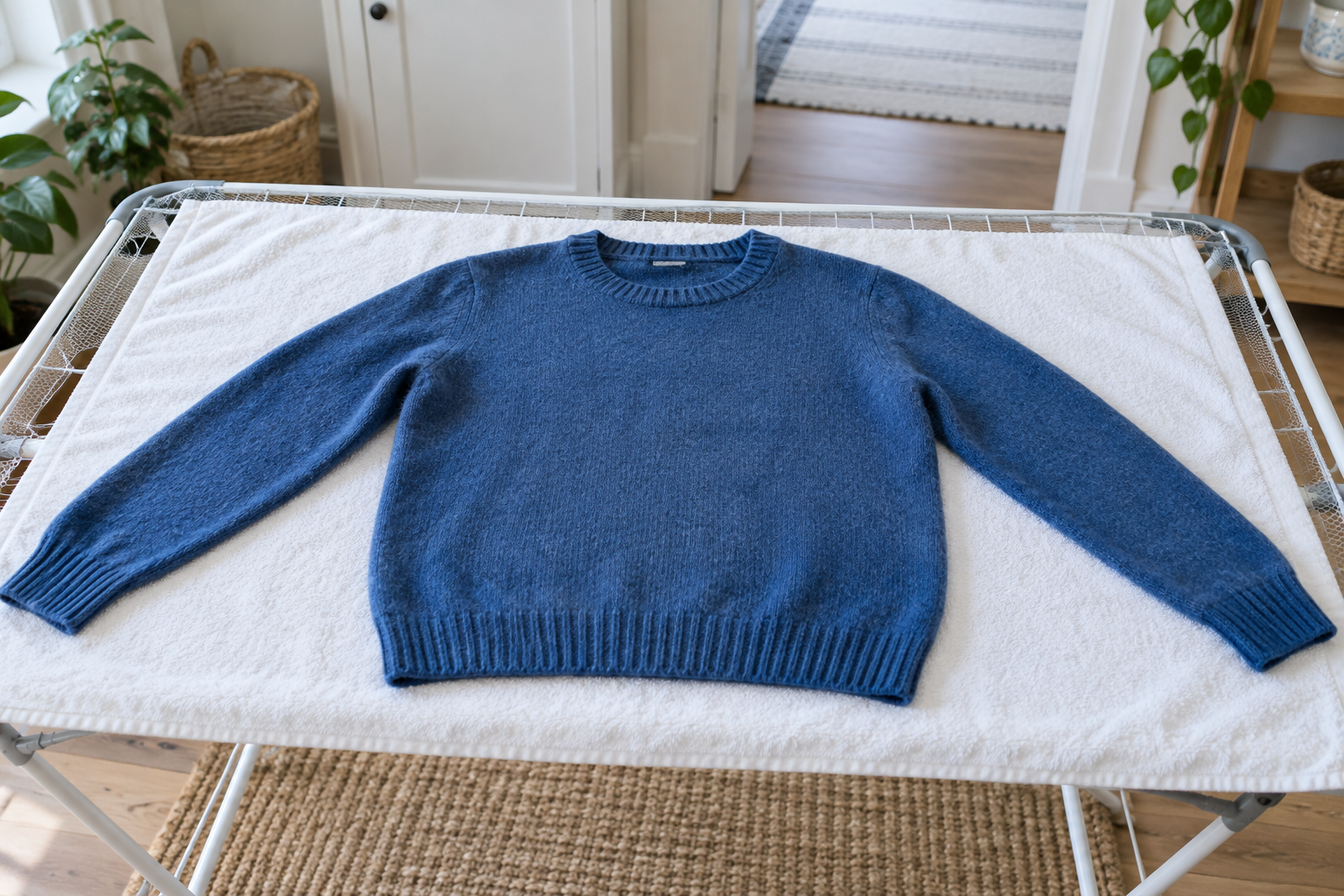
A flat drying rack or clean towel on a suitable surface can support a garment that would stretch under its wet weight on a hanger. Check the surface underneath: a damp towel should not be left on furniture that can be damaged by moisture.
Consider airflow and everyday use. A bed may look spacious but becomes inconvenient if the garment is still damp at bedtime. A place beside a radiator may seem faster, yet direct heat can be unsuitable. Choose a dry, ventilated spot where the item can remain undisturbed for the necessary time.
Arrange the shape gently
Follow the garment's washing and drying label. For a knit that needs flat drying, support it while lifting and remove excess water without twisting. If a towel is used to absorb moisture, press gently rather than wringing the garment inside it.
Lay the item in its natural shape. Straighten the body and sleeves without tugging them longer, and avoid leaving cuffs folded into thick wet bundles. You are supporting the existing shape, not trying to resize the garment through stretching. Give neighbouring items their own space rather than overlapping them.
Check before folding away
Feel thicker sections such as ribbing and seams as drying progresses. Where the instructions and construction permit, carefully turning the garment or changing a damp towel can help you manage the drying space. Support it throughout the move.
Do not judge dryness from one thin area alone. A collar or waistband may hold moisture after the body feels dry. If several garments need this treatment, wash them in manageable batches. One properly supported jumper is easier to handle than a pile of wet knitwear waiting for a surface that is already full.