Check the space around the collar
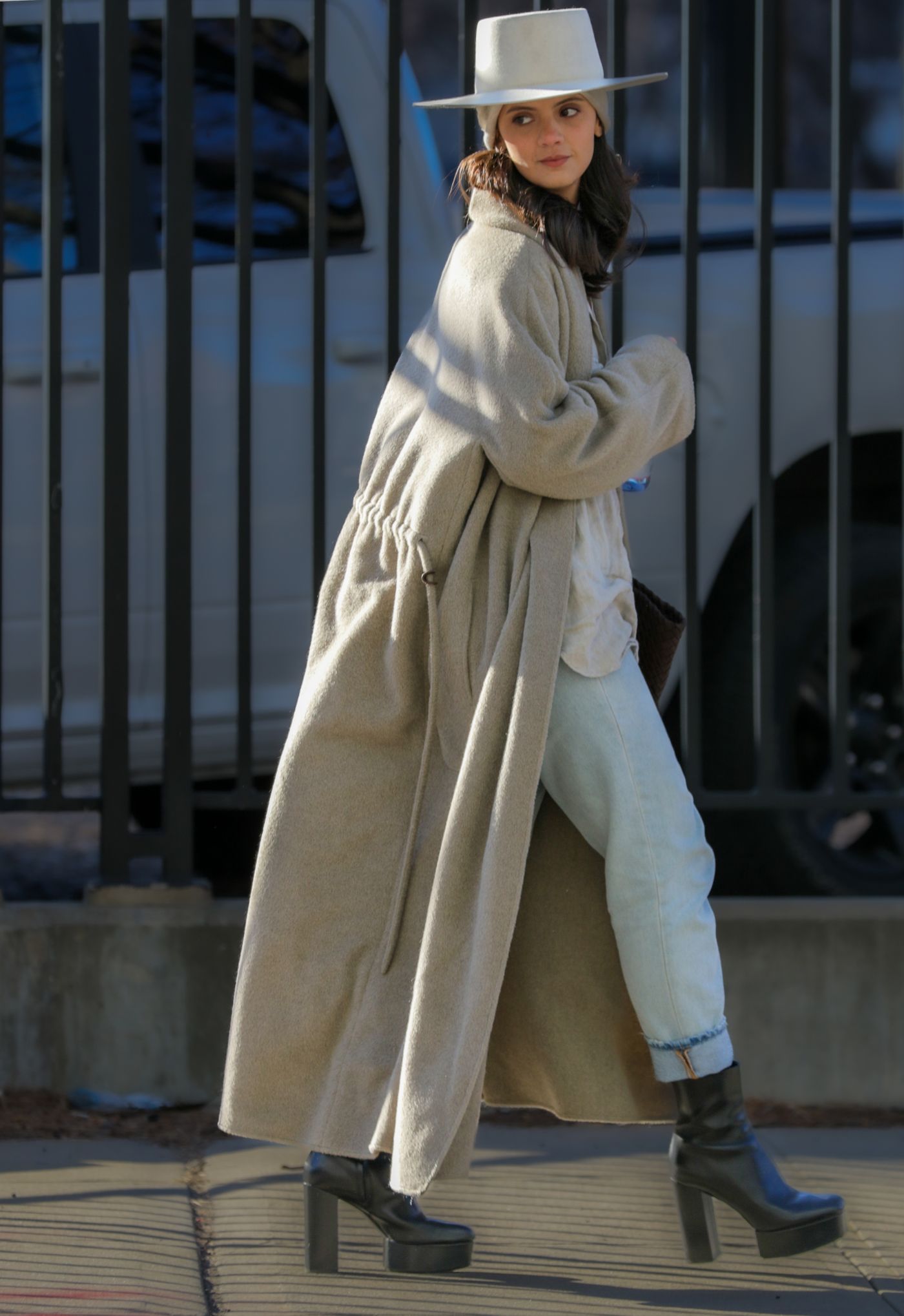
A high coat collar can meet the brim or lower edge of a hat when you turn your head. Put the coat on, fasten it and move normally. A hat that feels fine alone may become awkward once a thick scarf fills the remaining space.
Choose a fit that feels secure without pressure. Do not rely on a hat being uncomfortably tight to keep it in place. If it repeatedly shifts, a different size or style may suit you better.
Compare texture as well as colour
A knitted hat over a structured coat creates a different impression from a felt hat. You can repeat a colour or introduce a clear contrast. Look at the actual materials in daylight, especially with dark shades that appear identical indoors.
If the coat has a busy pattern, begin with a plainer hat. If both are simple, a textured scarf can add another detail. These are starting points, not a requirement to balance every item mathematically.
Think about taking it off
Consider where the hat will go when you reach your destination. A structured brim may not tolerate being crushed into a small bag. A knitted hat is easier to pack, but still needs suitable care if it becomes damp.
For wind or rain, check what the maker says the hat is designed to handle. Appearance alone does not establish weather resistance. Let the forecast and the journey influence the choice, and dry or store the hat according to its material after use.