Preserve the original fold
Lay the garment flat in good light and inspect both sides. Find the ends of the loose section without pulling the thread farther out. The surviving fold and neighbouring stitches show where the hem originally sat; take a photograph if that will help you keep its position.
Look for worn cloth, a tear or marks along the edge. Sewing through weak fabric may not produce a durable repair. A lining can also come loose independently of the outer hem, so identify which layer needs attention before joining anything together.
Choose a repair that suits the cloth
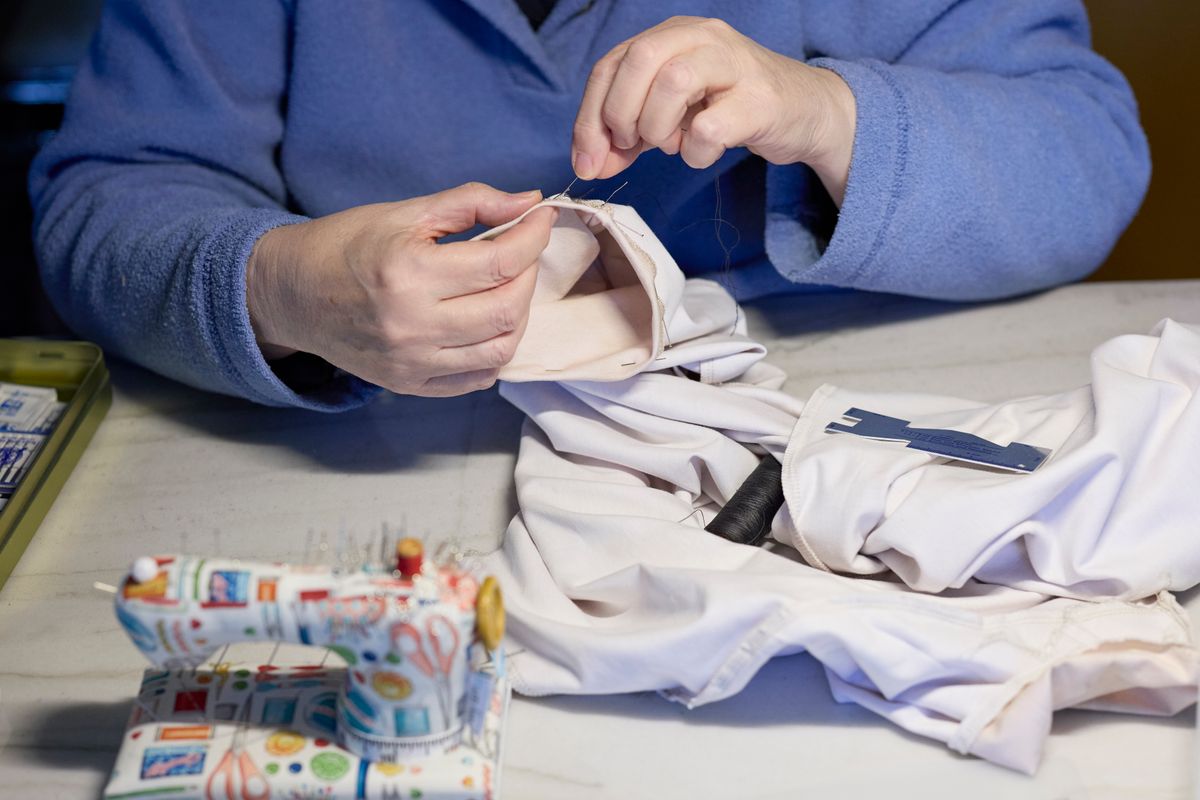
For a small failure in an uncomplicated hem, a few discreet stitches matching the existing construction may be enough. Use a suitable needle and thread, support the fold and avoid pulling so tightly that the outside puckers. Check the visible side as you work.
A stretch knit, a fine transparent fabric or a shaped skirt hem may need a different technique from a straight woven trouser leg. If you are unsure how the original stitching functions, a repairer can assess it. There is no benefit in turning a minor failure into a new rigid section that behaves differently from the rest.
Be cautious with quick fixes
Fusible hemming tape requires heat and may affect the finish or future alteration options. Do not treat it as universally suitable or automatically reversible. Read both the tape instructions and garment care label before considering it, especially on delicate or synthetic fabrics.
Try the garment on after the repair and look at the hem while standing and moving. Remove any temporary pins before wearing it. If several sections are failing, repairing only the most visible gap may leave you repeating the job; have the full hem checked instead.