Identify the chart first
Read the retailer's explanation before choosing a number. A body chart describes the person a size is intended to fit; a garment measurement describes the item itself. The difference may include room for movement, design volume or stretch, so the two should not be treated as interchangeable.
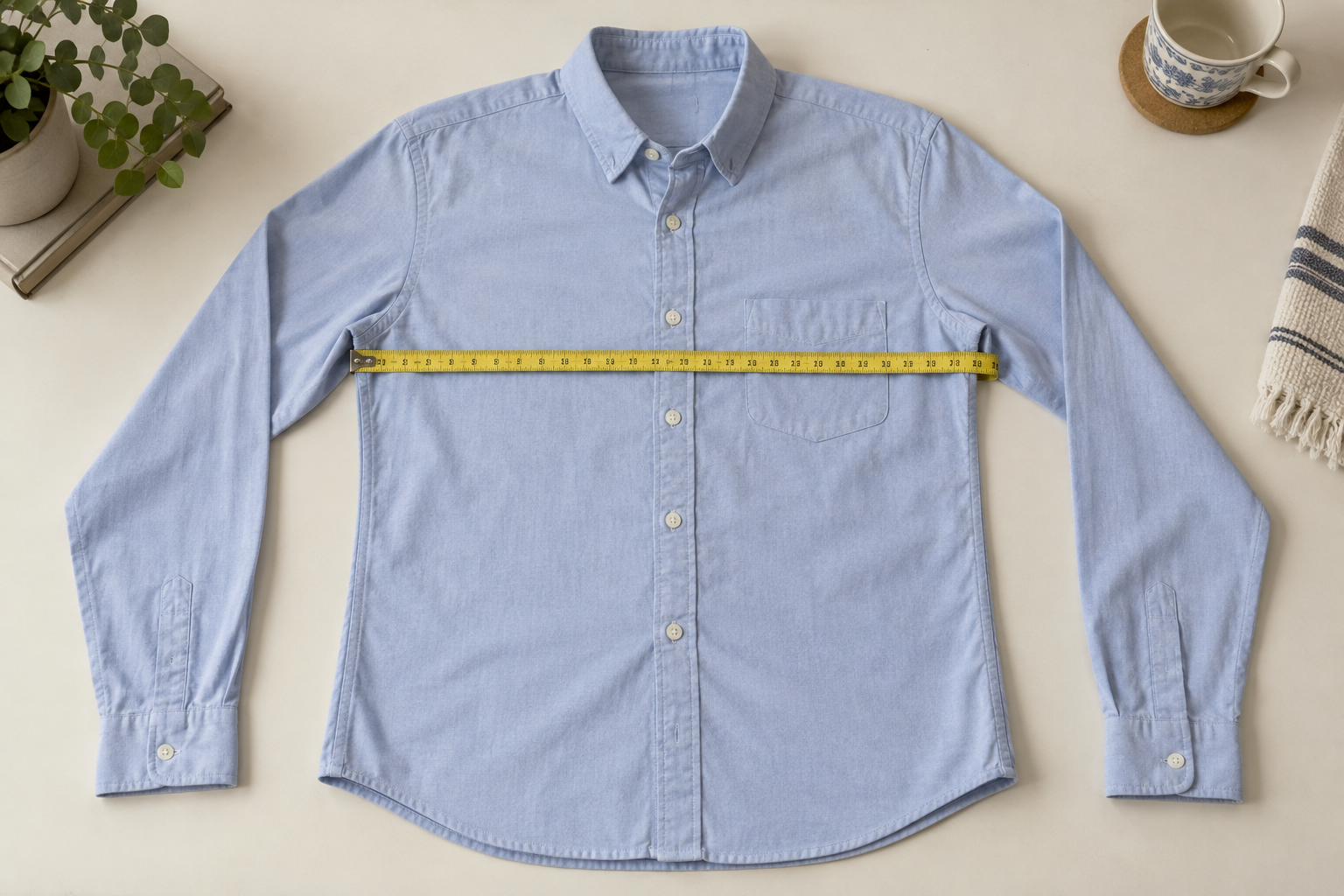
Check units and measuring positions. A flat chest width is not a chest circumference, and a shoulder-to-hem length is not necessarily the same as a measurement taken from the back neck. If the listing is unclear, ask how the figure was obtained.
Compare with something useful
For finished-garment measurements, choose a piece you already own with a similar purpose and construction. Lay it flat without stretching it and measure using the seller's method. A comfortable oversized sweatshirt is not a useful direct reference for a closely fitted woven blouse.
Record the measurements that matter for your likely fit issues, such as sleeve length, rise or inside leg. Keep the notes beside the garment name so you remember what the numbers refer to. Recheck rather than relying on a measurement taken years ago from an item you no longer wear.
Allow for what numbers cannot show
Fabric stretch, drape and construction influence how a garment feels. A numerical match can still produce a different result in another material or cut. Look at product photographs and descriptions alongside the chart, including the intended silhouette.
Check the retailer's current delivery and return information before ordering. Measurements can reduce guesswork, but they cannot guarantee fit or replace an ordinary try-on. Use them to make a more informed choice, then assess comfort and movement while keeping the purchase in suitable condition for whichever next step you decide to take.