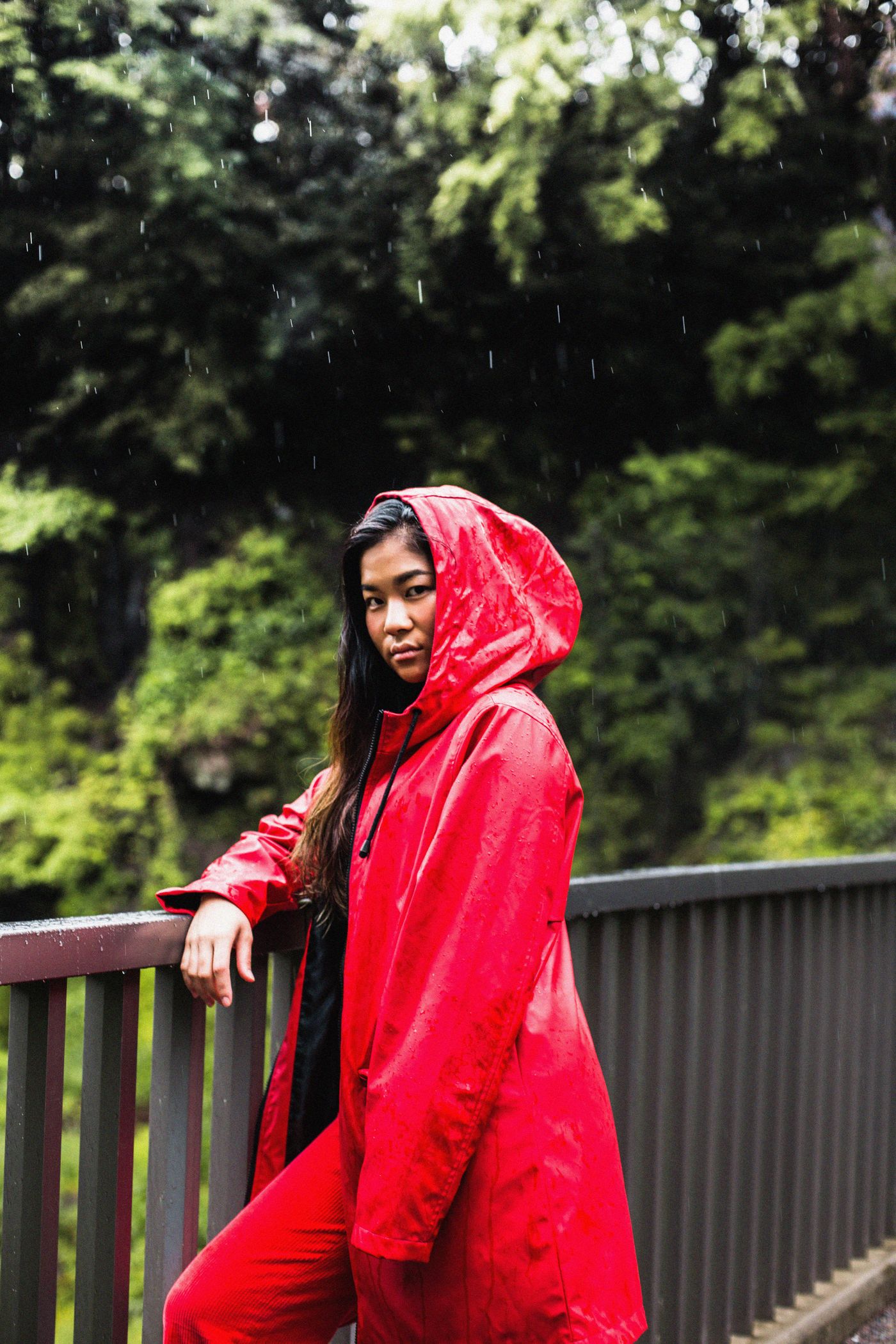
Keep fabric clear of the ground
Try the outfit with the shoes you intend to wear and walk on a dry surface first. Check the back of trouser hems as well as the front. A length that nearly reaches the floor may collect water and dirt as you move. A shorter hem can be useful, provided it still works with your socks and footwear.
Choose shoes based on the conditions and the information supplied for that pair. Do not assume a leather finish or a chunky sole makes footwear waterproof. Check the closures, seams and condition, and follow the care guidance. If you need a spare pair at your destination, plan where wet shoes will go.
Make the coat work with the bag
Fasten the outer layer over the full outfit before leaving. A coat that feels roomy over a shirt may restrict your arms over a jumper. Check whether the hood allows you to turn your head comfortably and whether the bag strap interferes with its collar.
Think about what you must reach during the journey. A phone or travel card should not require opening every layer of protection. If you use an umbrella, consider how you will carry it when wet. A separate sleeve or bag can help keep it away from the rest of your belongings, but remember to open it to dry later.
Allow for the indoor change
Wear a base outfit that feels complete once the wet coat comes off. Keep a dry layer separate if the day involves extended time outside, and avoid stuffing damp clothing against clean items. Follow garment care instructions when drying everything afterwards. The outfit does not need to look adventurous; it needs to make an ordinary wet day less cumbersome.