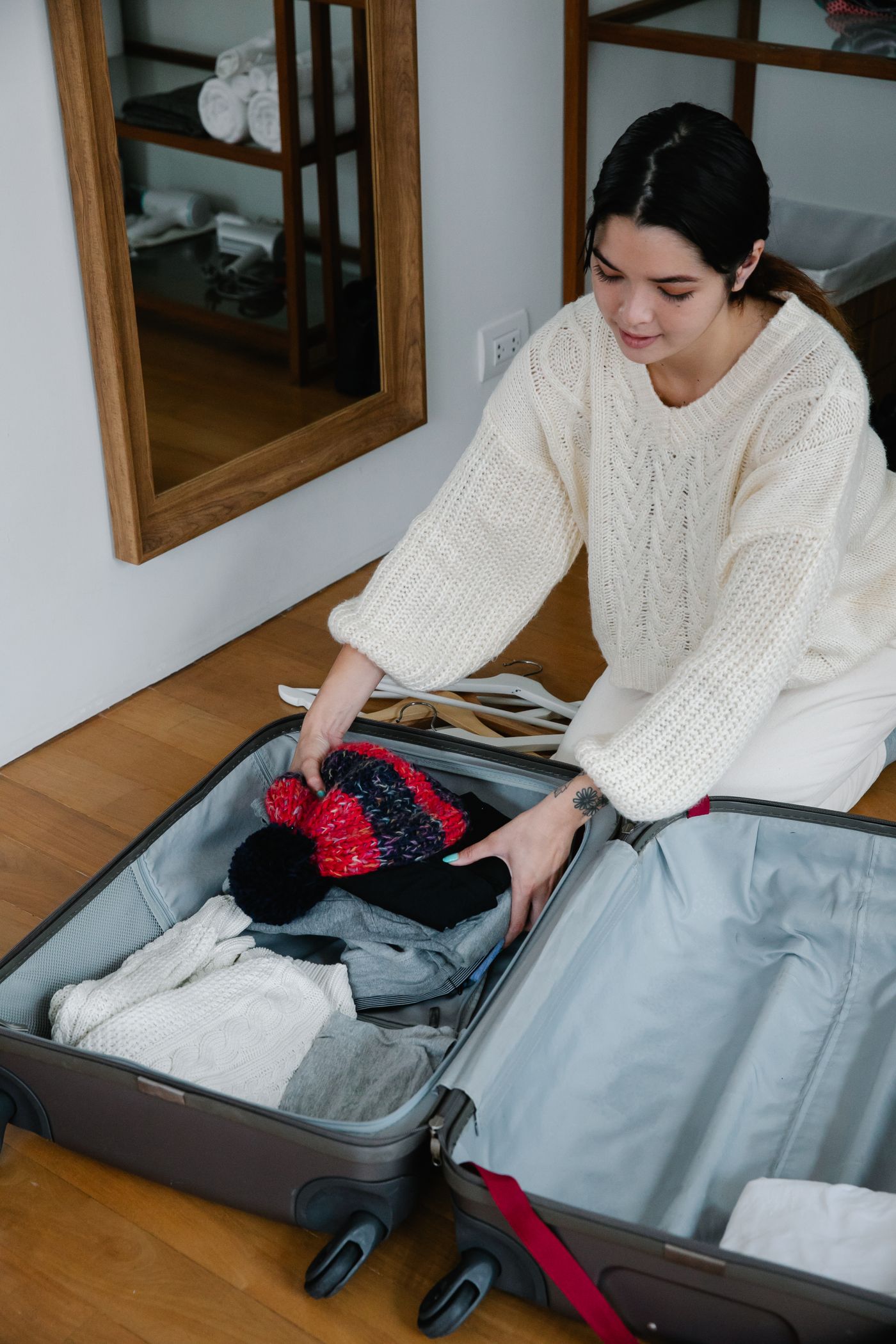
Lay out the actual days
Write down the main activities: travel, walking, one dinner, perhaps a museum or a show. Check whether any booking has a dress code. This gives you real gaps to fill instead of an open-ended reason to add another pair of shoes.
Choose a small group of clothes that work across those plans. Trousers and jeans with two or three compatible tops may cover the trip, depending on its length and your preferences. A dress can replace a combination rather than becoming an extra just in case. Put each outfit together on the bed, including its layer, so you can see whether an item has a purpose.
Let the walking shoes lead
Take shoes you have already worn for a similar amount of walking. Try every planned hem with them. If a dinner outfit needs another pair, choose one that earns its luggage space and protect the clothes from the soles with a separate shoe bag.
Check the forecast shortly before packing, then pick an outer layer that works with the thickest top. A jacket that only fits over a T-shirt is less useful if a cool morning means adding a jumper. Consider what you can carry comfortably during the day when the jacket comes off.
Pack for finding things
Keep the first evening's clothes easy to reach if you will arrive late. Put small items together rather than scattering them between pockets. Leave a little space for worn clothes and any purchases you genuinely expect to bring home. Before closing the case, remove the outfit that duplicates another without serving a different plan. You can repeat trousers or a jacket without making every day look exactly the same.