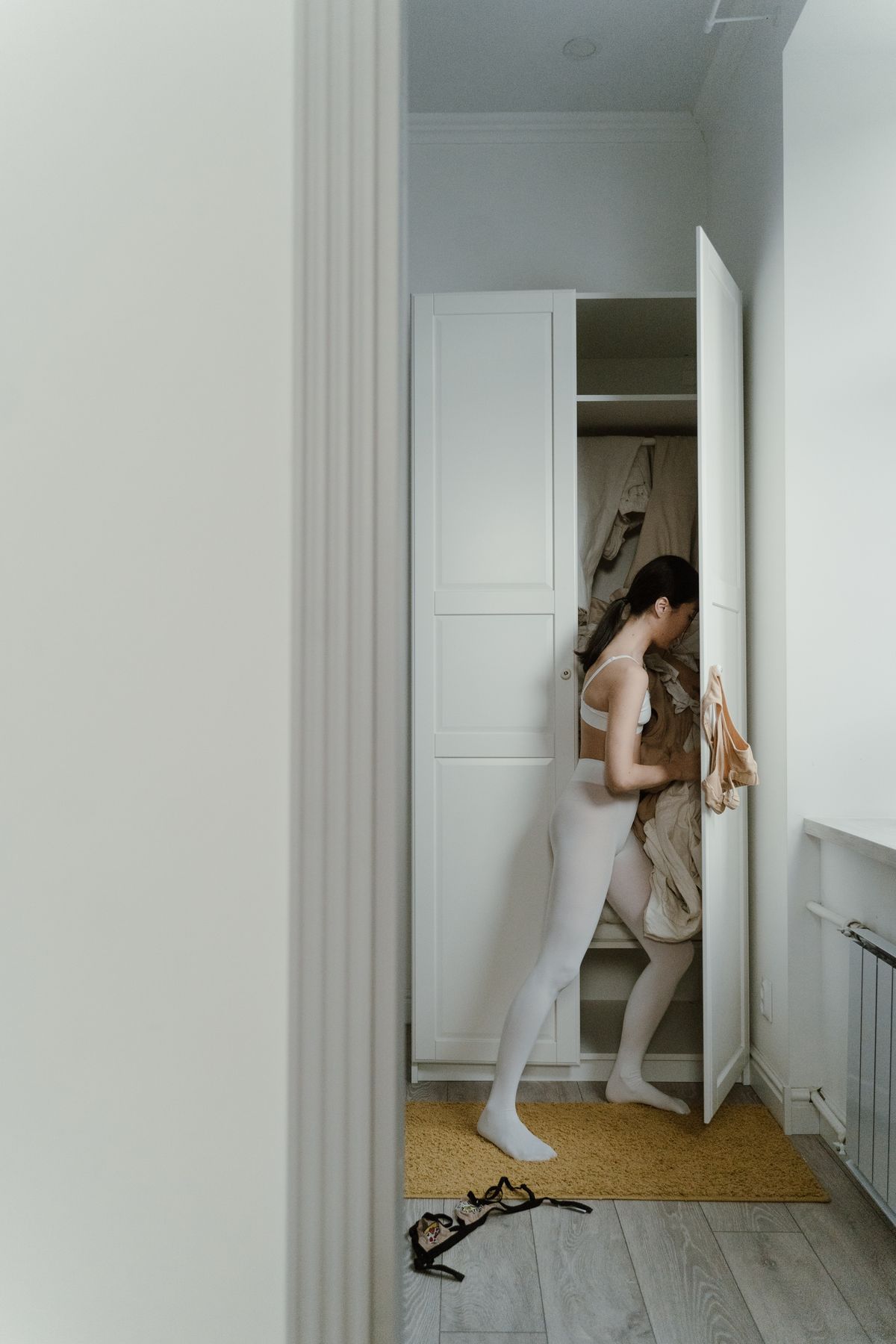
Choose the part that slows you down
Start with the problem you meet most mornings. It might be a rail packed so tightly that hangers cannot move, or a drawer where every dark top looks the same. Work on that one area before opening another. Keep the bed mostly clear so an unfinished sort does not become a late-night obstacle.
Put a laundry basket, an empty bag and a small box nearby. Use them for washing, items to move elsewhere and repairs. These are temporary destinations, not decisions about whether a garment deserves to stay. A favourite shirt with a missing button should not disappear into a donation pile because it is inconvenient today.
Handle each garment with a question
Ask whether you can wear it comfortably now and whether you know what you would wear it with. For an uncertain piece, try one complete outfit, including shoes. A skirt that seemed impossible may only need a different top; trousers that hurt when you sit are unlikely to improve through clever folding.
Keep unresolved decisions together in a modest space and choose a date to revisit them. You do not need to settle sentimental questions during a practical tidy. Concentrate on returning wearable clothes to the easiest positions, with enough room to remove them without pulling their neighbours down.
Finish the physical jobs
Allow the final half-hour for carrying things away, wiping an empty shelf and putting hangers back. Book the repair or place the washing where it will actually be done. Take a quick photograph of the finished area if it helps you remember the arrangement.
The useful result is a wardrobe you can operate tomorrow. A perfectly sorted floor surrounded by full bags is still an unfinished task.