Work with one drawer open
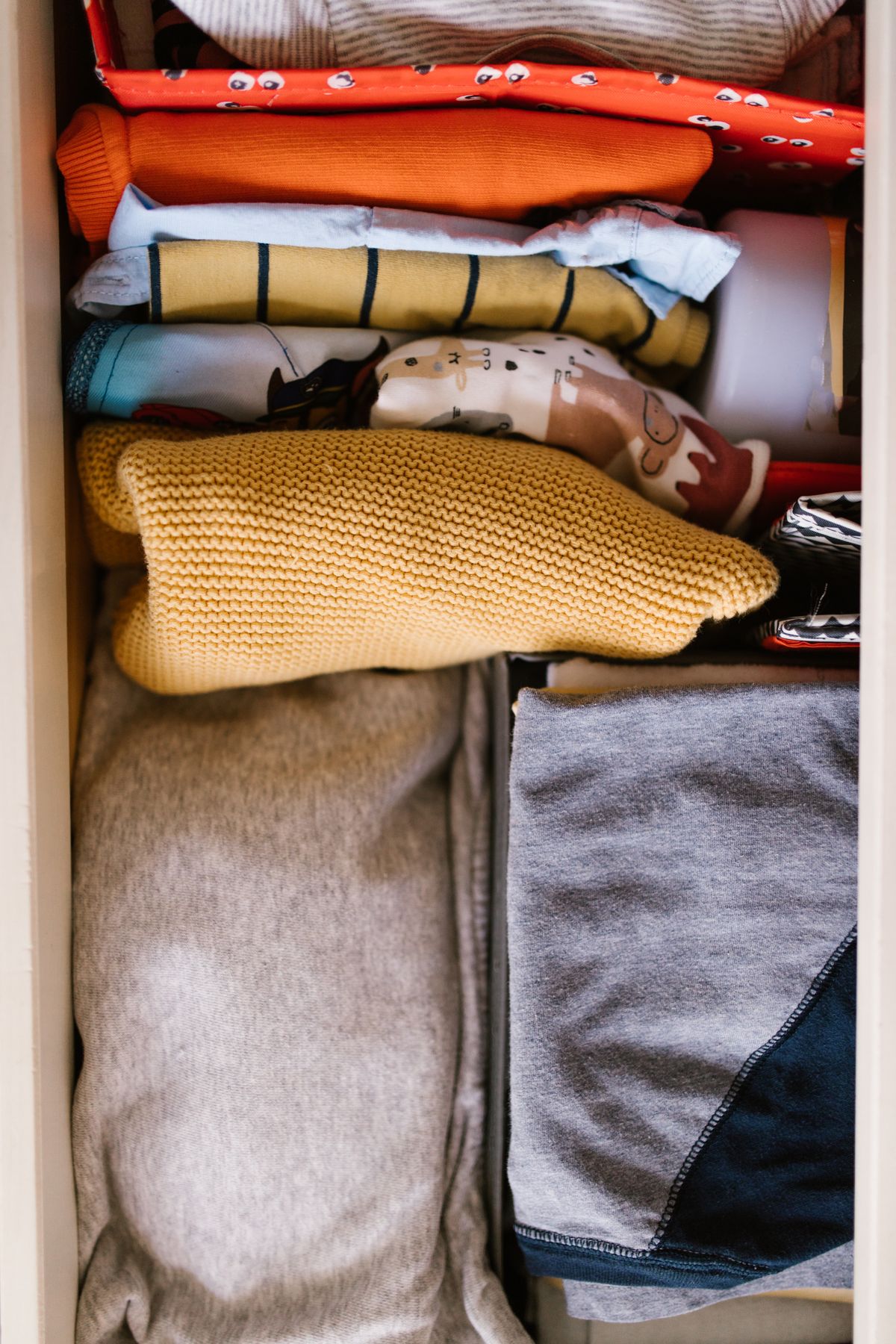
Empty a single drawer onto a clear surface and wipe out loose dust. Return items in the groups you actually use: work socks apart from walking socks, for example, or everyday tops separate from sleepwear. You do not need more categories than you can recognise at a glance.
Remove anything that belongs elsewhere. Spare buttons, receipts and jewellery can make a clothing drawer look full while providing no help when you are dressing. Give those items another home before deciding that the drawer itself is too small.
Test a simple arrangement
Fold similar items to a roughly consistent width, keeping the fabric loose enough to avoid forcing it. Try shallow rows if they let you see each piece. If upright folding will not hold without tightly compressing the contents, use a low stack instead.
A clean spare box can separate small items without a new purchase. Check that its edges are smooth and that the drawer closes without scraping the contents. Leave a little room around groups so freshly washed clothes can be returned quickly. The arrangement should survive hurried hands, not just look orderly when untouched.
Notice the first thing that collapses
Use the drawer normally for several days. If socks migrate into another group, a divider may solve a real problem. If one row repeatedly tips over, it may need fewer clothes or a different fold. Buy an organiser only once you know the dimensions and purpose it must serve.
Do a brief reset while putting laundry away. This is a good moment to remove an unmatched sock for later pairing or move an uncomfortable top out of regular use. A drawer stays manageable through small decisions, not through continually rebuilding an elaborate system.