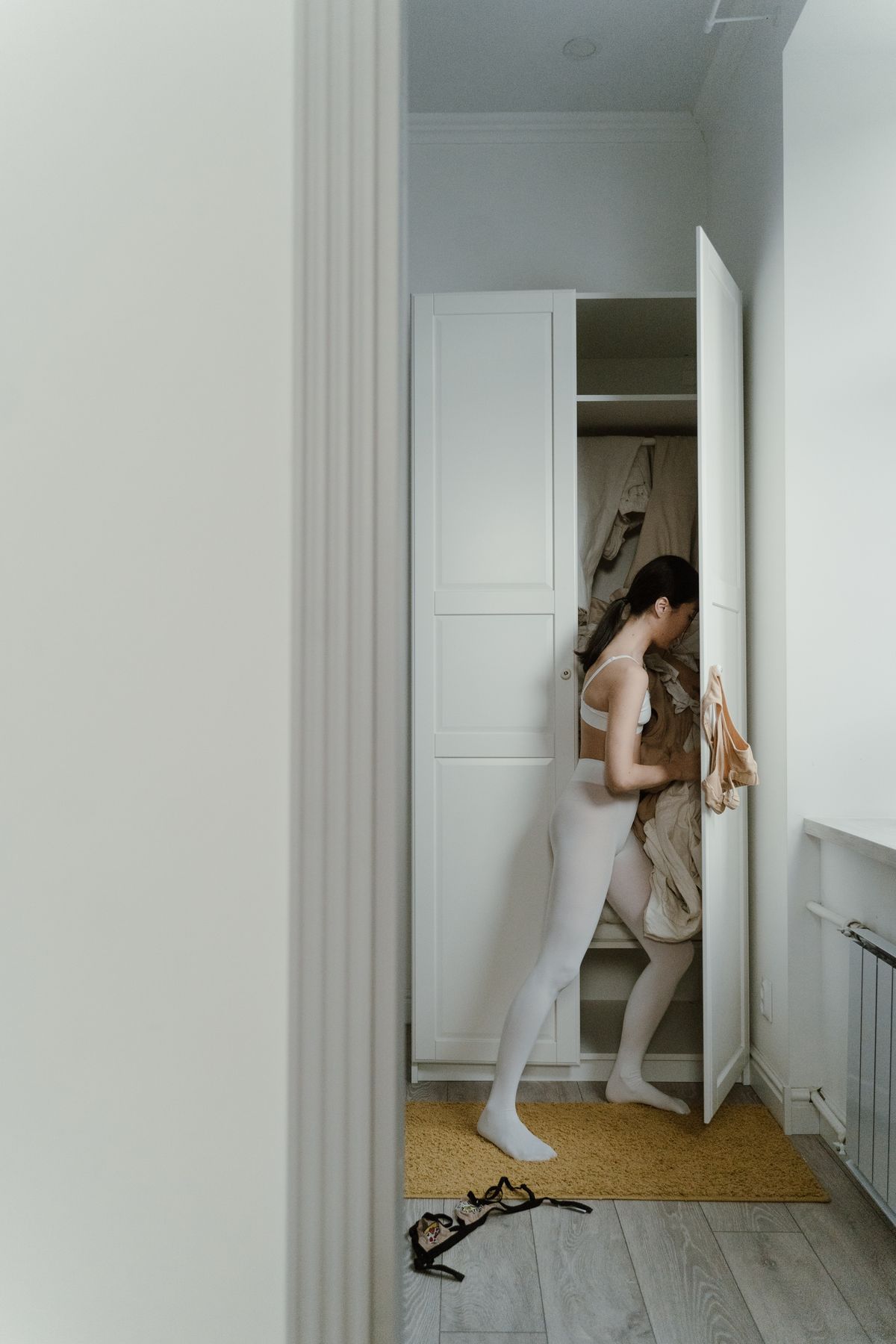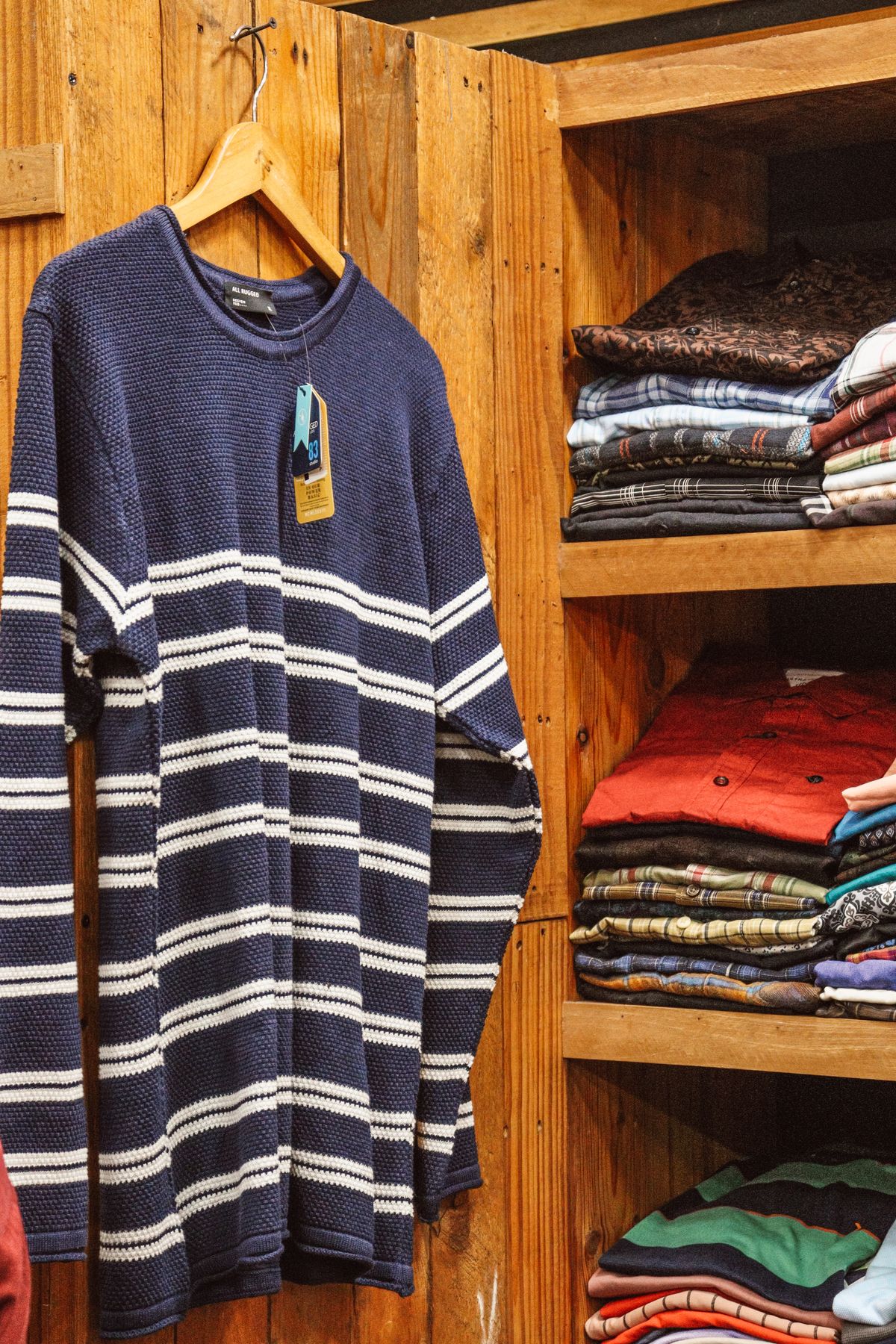
Test the fit you have today
Try the garment with the underlayers and shoes you would actually use. Sit, raise your arms and walk. A piece that closes only while you stand still is not a comfortable everyday option. Notice exactly where it feels wrong: the shoulder, rise, waistband or sleeve can point to very different problems.
Separate a styling problem from a fit problem. A different top may help a skirt feel current, but it cannot make a painful waistband comfortable. Avoid building the rest of an outfit around hiding or tolerating something that restricts you.
Consider an alteration without assuming
A tailor can assess whether enough fabric and suitable construction are available for a change. Ask what the finished result could reasonably be and whether it would affect pockets, proportions or details. An alteration is an option to investigate, not a promise that every garment can be made to fit.
If you want to keep clothes for a possible future change in size, choose a limited group and store them separately from the working wardrobe. This leaves the easiest space for clothes that serve you now. You can revisit the stored group later without confronting it every morning.
Let the decision have an ending
For wearable pieces you no longer want, choose a recipient or donation route that accepts them. For damaged items, check repair or textile collection options rather than mixing them into a bag described as ready to wear.
Sentimental clothes can stay as keepsakes if that matters to you. They do not need to justify themselves as future outfits. What helps most is distinguishing a remembered garment from an active one, so opening the wardrobe presents useful choices instead of a series of old expectations.