Sort by the way you leave the house
Put the pairs you wear most in the easiest position. Walking shoes, everyday trainers and work shoes may deserve the front of a rack; occasional heels or seasonal sandals can be stored farther away. Keep each pair together so you are not searching behind boots for a missing shoe.
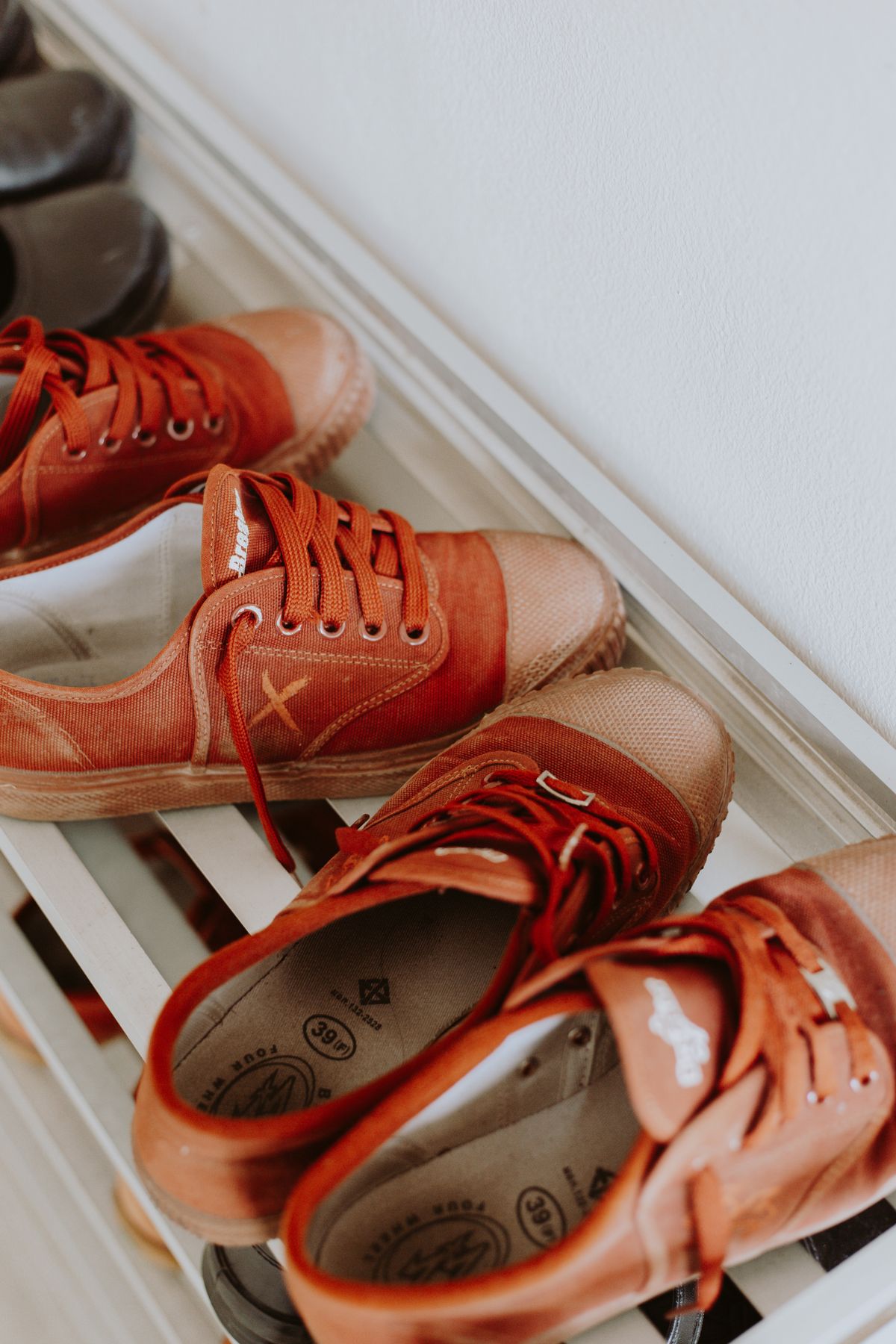
Notice where shoes naturally land when you come home. A modest rack near that point may work better than generous storage in another room. Make sure it does not narrow a doorway or become something to trip over, especially when boots extend beyond the shelf.
Leave a drying place
Wet footwear should not go straight into a closed box beside clean, dry pairs. Follow the manufacturer's drying and care advice, keeping shoes away from heat that could damage them. A washable tray can contain dirt while a pair is waiting to be cleaned or dried.
Empty gravel and debris before returning shoes to regular storage. Let the inside air as appropriate, and avoid stacking dirty soles directly against another pair's uppers. Small habits at this point reduce the cleaning work later.
Choose storage around the shoes
Measure tall boots and bulky trainers before buying a rack. A shelf that fits only low shoes can make the larger pairs permanent floor residents. Boxes may protect occasional footwear, but label them or use a quick photograph so you can identify the pair without opening every lid.
Keep care supplies nearby only if they can be stored safely and according to their labels. Review the space when the weather changes. Moving inactive pairs out of the main row is often enough to restore order without adding another piece of furniture.